Home / Guides / Factory verification
Factory verification guide · 2026How to verify a Chinese manufacturer before you pay a deposit.
Verify three separate things: the company legally exists, the claimed production site is connected in writing to the party taking your order and payment, and that site can make your exact product to the agreed specification. A business license proves only the first. Live or on-site evidence can corroborate the other two, but it must be tied to the legal entities and your current order.
Use the eight checks below before a meaningful first deposit. If the supplier cannot explain a mismatch in writing—or refuses to show evidence you could independently compare—pause the payment.
A real supplier must pass three different tests.
Do not let one good document—or one perfect sample—answer a different question than the one it actually proves.
| Question | Evidence to compare | Not enough by itself |
|---|---|---|
| Does the company legally exist? | Chinese business license, Unified Social Credit Code and official registry record. | An English company profile, website or marketplace badge. |
| Is the claimed site connected to this supplier and order? | Written links between the contracting entity, factory operator, exporter, bank beneficiary and current purchase order, corroborated by a live walk or visit. | Factory access, catalog photos, a showroom or a prerecorded montage without the legal and order trail. |
| Can it hold your specification? | Product-specific machinery, capacity evidence, signed reference sample, inspection records and a small test run. | A hand-picked sample made before the bulk process is defined. |
The eight-check manufacturer verification checklist.
- 01 · Chinese legal identity
Request the Chinese business license and the exact Chinese legal name—not only an English trading name.
- 02 · Official registry record
Search the name or 18-character Unified Social Credit Code in China's official enterprise-credit system.
- 03 · Entity, contract and bank trail
Match the contracting party, factory operator, exporter, invoice issuer and bank beneficiary—or document every relationship between them.
- 04 · Site and current-order proof
Use an uncut live walk or independent visit to corroborate the site, then connect it to your order with a current job card, purchase order or production agreement.
- 05 · Product-specific capability
Verify the machines, tooling, process knowledge, materials and current work that apply to your exact product.
- 06 · Capacity you can reconcile
Compare claimed daily output with active lines, cycle time, staffing, existing orders and the proposed lead time.
- 07 · Quality system and sample control
Check working inspection, calibration and corrective-action records, then tie the signed reference sample to measurable specifications.
- 08 · Inspection and payment plan
Agree the checkpoints, evidence, correction window and payment milestones before production starts.
Start with the Chinese legal entity.
The name on the listing may be a brand, an exporter or a translated nickname. Your contract needs the entity that can actually be identified.
1. Request the Chinese business license.
Record the Chinese legal name, 18-character Unified Social Credit Code, legal representative, registered address, registration status and business scope. A scope that includes manufacturing for a relevant category is useful evidence, but words on a license do not prove the listed company owns the machines you need.
2. Search the official registry.
Use China's National Enterprise Credit Information Publicity System. Search the exact Chinese name or credit code. Compare the returned entity and check whether it appears on an abnormal-operations or serious-violations list. The interface is primarily Chinese; copied English names often fail.
These are the main Chinese fields to compare:
- 名称 — legal name; 统一社会信用代码 — Unified Social Credit Code.
- 登记状态 — registration status; 法定代表人 — legal representative.
- 住所 / 地址 — registered address; 经营范围 — business scope.
- 经营异常名录 — abnormal operations; 严重违法失信名单 — serious violations.
The official system uses real-name registration and may be difficult to reach from outside China. If access fails, ask the supplier to show the license QR code and a live registry result, but treat that only as supporting evidence. For an independent check, have a China-based lawyer, adviser or registry provider retrieve the source record and save the dated result.
3. Reconcile the payment trail.
Compare the entity on the contract, pro forma invoice and beneficiary account. Also name the factory operator and the party responsible for production in the purchase order or production agreement. An export company or related trading entity can be legitimate, but every relationship should be disclosed in writing before payment. A late request to pay a personal or unexplained third-party account is a stop signal.
Then prove the factory behind the paperwork is the one behind your quote.
A company can legally exist and still be a trading company. That is not automatically bad. A factory visit corroborates access, visible activity and capability at that moment; it does not by itself prove legal ownership, control of the site or allocation of your order.
4. Ask for a live, uncut walk.
Have the call move from the exterior or posted license to the production floor, raw-material area, work in progress and finished-goods area. Ask the operator to show a specific machine and a current job card, purchase-order reference or production action in real time. Then compare the site operator and order reference with your written agreement. Even a genuine live walk proves access and current activity—not ownership, control or that your order has been assigned there.
5. Test knowledge of your exact process.
Ask which machines and steps make your product, what the bottleneck is, which operation is subcontracted and what usually causes rejection. A capable operator answers in process details. “No problem, we make everything” is not capacity evidence.
6. Reconcile capacity instead of accepting a number.
Ask for line count, practical cycle time, shift pattern, current commitments and expected daily output for your SKU. The numbers do not need to be perfect, but they need to form a plausible schedule. Include subcontracted work rather than letting it disappear from the lead-time calculation.
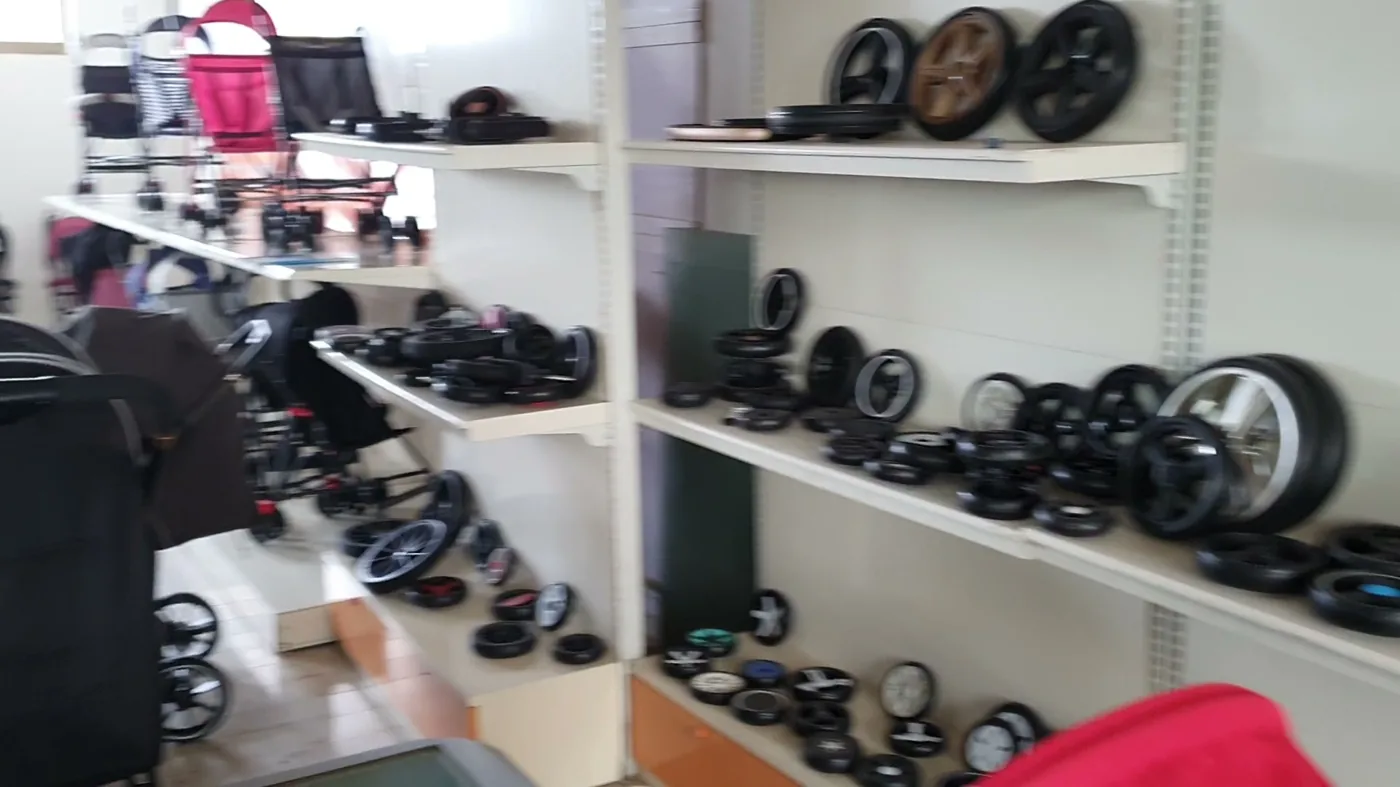
Want to see the on-site version? Groundwork publishes a real factory-floor walk-through and the four things checked during a visit.
A verified factory can still produce a bad bulk run.
Factory verification selects the production partner. It does not replace production control.
7. Check the working quality system, then lock the sample.
Do not stop at a certificate. Ask to see recent, product-relevant incoming and in-process inspection records; the calibration status of measuring tools; a labeled quarantine area for nonconforming goods; a completed corrective-action record; and the person authorized to stop or reject production. Then keep a signed or sealed reference sample and attach it to a versioned specification: material, dimensions and tolerances, color reference, construction, labeling, packaging, functional tests and defect classification. State who holds the reference and how a change is approved.
8. Define inspection and payment milestones before the deposit.
Write down which evidence releases each payment. For a first production run, that may include incoming-material confirmation, a during-production check while correction is still possible, final checks and a pre-dispatch decision. If a defect is corrected, require re-inspection of the corrected output rather than accepting a message that it is “fixed.”
See how the four quality checkpoints fit together and what a rejected run, corrective production and re-inspection look like in a real report.
What to request, what to compare, what should stop payment.
| Request | Compare it with | Pause when |
|---|---|---|
| Chinese business license | Official registry record, contract name and actual operating address. | The code returns another entity, the status is abnormal, or the supplier refuses the Chinese original. |
| Pro forma invoice and bank details | Contracting entity and any disclosed export relationship. | The beneficiary changes late, is personal, or the third party has no written role. |
| Live floor walk or audit | Operating entity, current order reference, address, machines, materials and product category. | The site cannot be linked to the contracting party and current order, or only a showroom is shown. |
| Capacity plan | Lines × practical cycle time × shifts, minus current committed work. | The proposed output cannot be explained or all production is quietly subcontracted. |
| Quality-system records | Inspection logs, calibrated tools, nonconforming-goods control and corrective actions. | Only a certificate is shown, records do not match the product, or nobody can stop a failed run. |
| Approved reference sample and spec | Bulk bill of materials, tolerances, tests, labels and packaging. | The factory will not sign or retain the agreed reference and revision. |
| Inspection plan | Production milestones, defect criteria, correction window and payment releases. | Inspection is allowed only after full payment or third-party access is refused. |
This checklist reduces avoidable uncertainty; it is not a guarantee of future performance or a substitute for product-specific legal, safety or compliance advice.
Is an Alibaba Verified Supplier badge enough?
No badge should be your only check. Use the underlying assessment report as a starting document, then verify the entity, factory and capability against your exact order.
Alibaba says its Verified Supplier program uses third-party on-site verification and makes an assessment report available to buyers. That report can provide useful evidence about the legal status, facilities, machinery, production capacity and quality systems.
It still answers a limited question at a point in time. Read the report date and scope, confirm that the named entity is the entity you are contracting with, and check whether the assessed production process covers your SKU. Then keep the sample-to-bulk and inspection controls above.
Primary source: Alibaba.com Verified Supplier program, accessed August 14, 2026.
What Groundwork's published evidence proves—and what it cannot.
The factory-floor material and QC report on this site are real field evidence. They illustrate individual checks, not a complete public due-diligence file for a named supplier.
| Published evidence | It supports | It does not establish |
|---|---|---|
| Factory-floor walk-through | Access to a production floor and the visible processes, equipment and activity at the time recorded. | Legal ownership or control, the contracting and payment entities, allocation of a particular buyer's order or future performance. |
| Actual QC report | Documented defect findings, a failed tolerance, corrective production and re-inspection. | A supplier's complete legal verification record or the quality of a future production run. |
Buyer, supplier and payment records are withheld to protect the parties. That means this guide publishes the verification method and its limits; it does not present a generic photo or anonymized story as complete proof about a supplier you are considering.
Questions buyers ask before paying a Chinese supplier.
How do I check if a Chinese company is real?
Request its Chinese business license, then search the exact Chinese legal name or 18-character Unified Social Credit Code in China's National Enterprise Credit Information Publicity System. Match the returned entity with your contract and payment documents. This proves registration, not manufacturing capability.
How can I tell a manufacturer from a trading company?
Use a live uncut walk or independent visit to corroborate factory activity, then connect the operator, contracting entity, exporter, bank beneficiary and current order in writing. A trading company is not automatically bad; an undisclosed middleman or unexplained entity mismatch is the risk.
Is a good sample enough to trust the bulk order?
No. A sample proves that one acceptable unit can be made. Protect the bulk run with a signed reference sample, measurable specifications, defect criteria, during-production checks and a final release decision.
Should I inspect a factory before paying a deposit?
For a meaningful first order, verify the legal entity and production capability before the deposit. The depth can range from document checks and a live walk to an independent on-site audit, depending on order value, product complexity, compliance risk and what cannot be verified remotely.
Official systems used in this guide.
- China National Enterprise Credit Information Publicity System — official company registration and public credit records.
- State Administration for Market Regulation guidance — official notice on the registry's real-name registration and query access.
- Alibaba.com Verified Supplier — the platform's description of third-party verification and assessment reports.
Sources last checked August 14, 2026. The operational checks are Groundwork's field process; company, tax, contract and compliance questions should be reviewed for the buyer's own jurisdiction and product.
