Three Failed Orders in China, Then a 200,000 Piece Order
Three orders for the same pants. All three went wrong
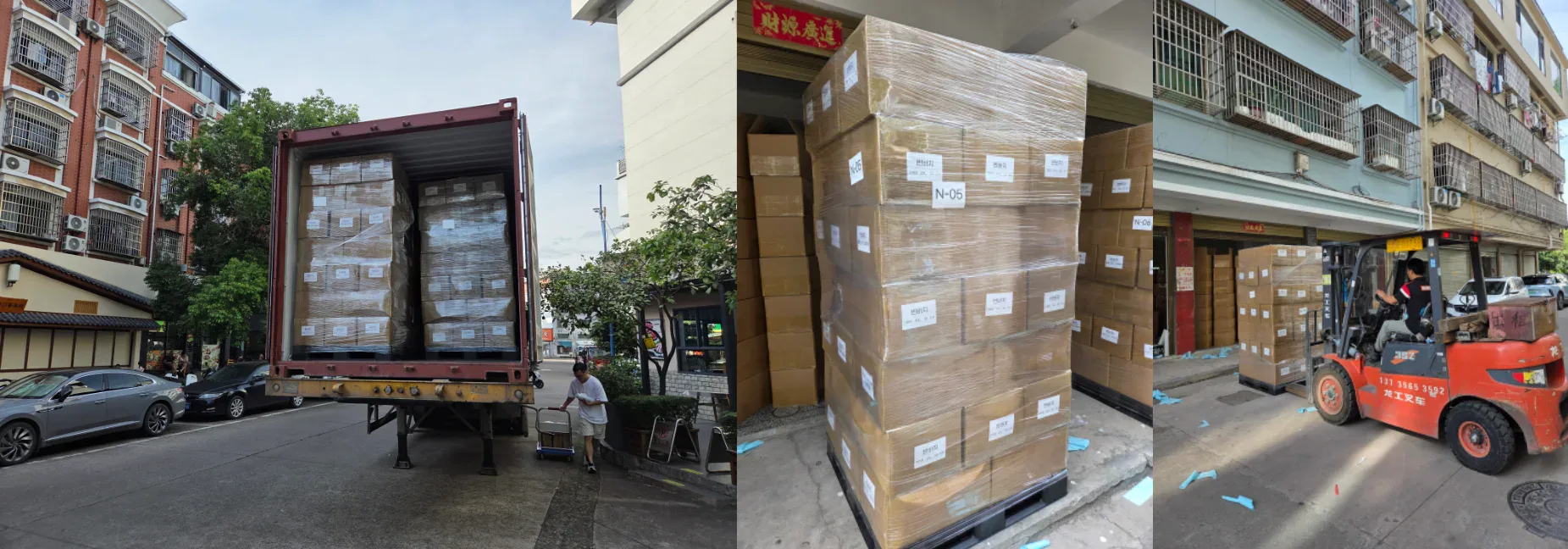
Before this customer came to us, they had ordered the same pants in China three times. All three went wrong. By their own account, all three are still in legal dispute.
This is usually what goes wrong when nobody is on the ground.
Same product, same country, three different suppliers. Every time, something was wrong.
The photo above is their first order with us going out. June, 42,000 pairs of pants, one 40HQ container. Left to right: the loaded container on the street, a wrapped pallet of cartons, and the forklift that put it there.
They told me it was the first time there had been no problem.
This is a record of what happened before that container was filled.
What is in the boxes
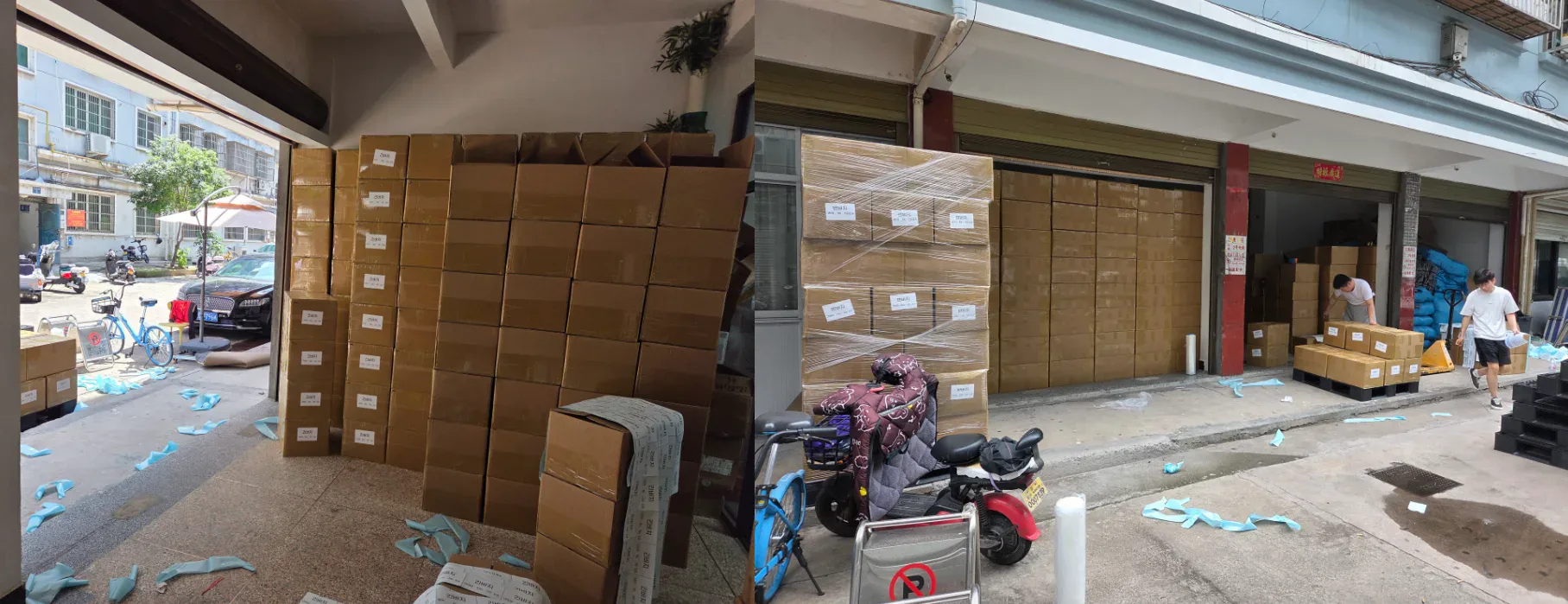
All pants, split by size and color, and this is the whole order boxed.
Every piece was inspected before it went into these cartons, and the checks started long before that, with the fabric.
This is the last chance. Once it goes into a carton, nobody looks inside again. The next person to unfold it is your customer on the other side of the world.
Why this customer did not want compression packing
Compression packing fits far more into the same container. Freight cost drops. It is why wholesale buyers moving large volumes often use it.
This customer ran the numbers and decided against it.
The reason was at their end, not ours. Compressed goods have to be opened out and sorted again on arrival, and the labor cost of doing that was higher than the freight they would have saved. So they asked us to skip compression and carton the goods as they were.
This is why there is no correct answer on packing. Which option is cheaper is not decided inside the container. It is decided once you add the labor and handling at the destination, and the customer knows that side better than we do.
Our job is not to make that calculation for them. It is to execute exactly what they decided.
Cartons get numbered on the front and the back
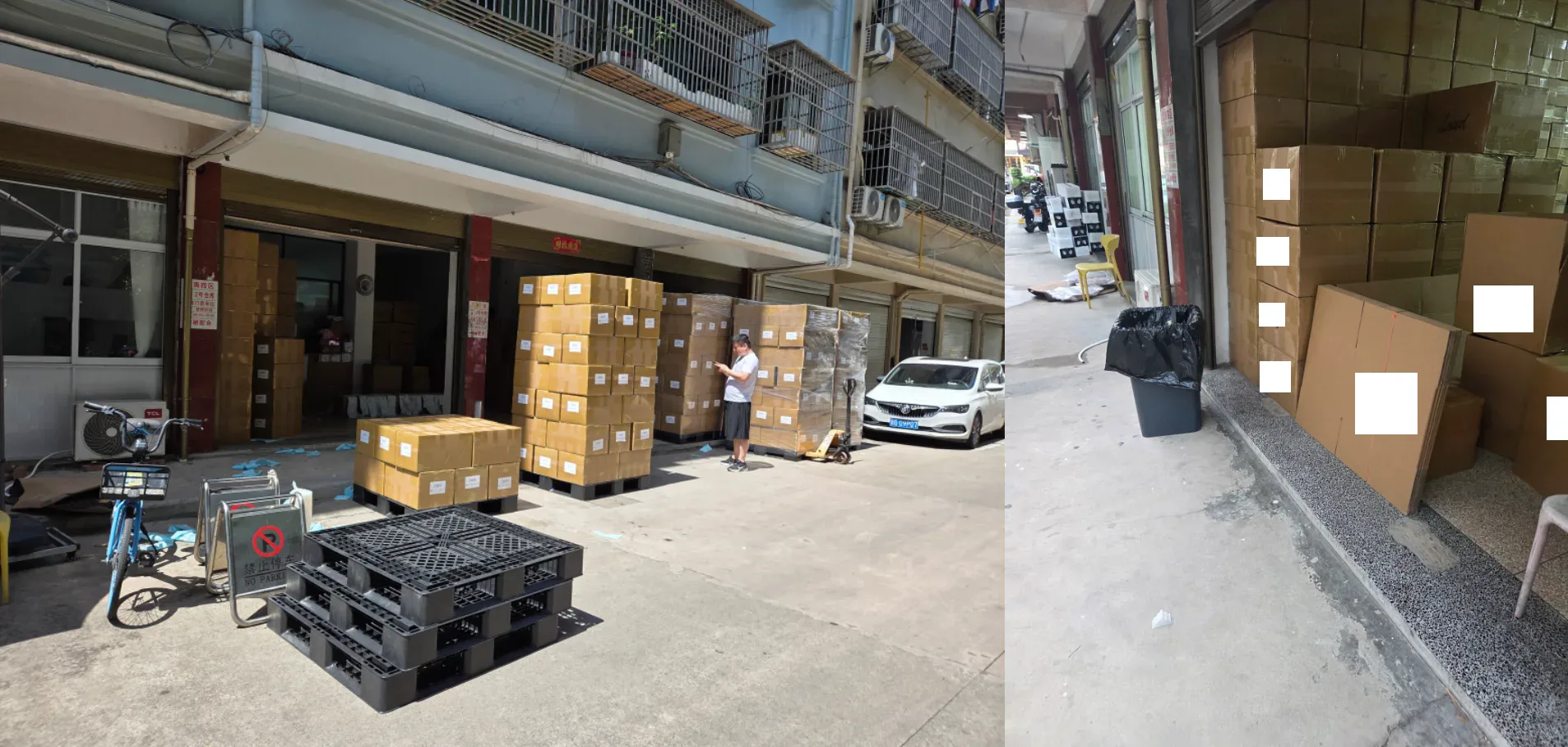
Cartons waiting to ship. You can see the white labels.
We put the packing number on both the front and the back of every carton. Label one side only and some boxes will always end up facing inward once they are stacked. Then somebody has to pull the box down and turn it around just to read it. The same thing happens again at the receiving warehouse.
The numbers have to match the packing list one for one. Customs cares about this, and so does whoever counts the goods on arrival. When the numbers do not match, every carton gets opened.
The rest is decided by the customer
Packing changes from order to order. Other customers have asked for individual OPP bags, hang tags fitted by hand, a barcode label on every bag, and full inspection, so the goods can go straight to sale on arrival.
All of that is done by hand. At 42,000 pieces, that is 42,000 times. Which is why the packing specification has to be settled before production starts. Changing it after the garments are made means handling every piece again.
How the container gets loaded
Go back to the photo at the top. Cartons go in one at a time by forklift.
The order matters. Heavy low and deep, and as little empty space as possible. If cargo has room to move inside the container, it moves, and then it gets crushed.
In August, the customer came to Yiwu
After the June shipment arrived, they flew out to China.
The reason was simple. They wanted to see how we work.
That is a reasonable thing to ask for after three bad orders. There are things photos and reports do not confirm, and for those you have to come and look.
So we showed them all of it.
- The factory. The line actually making those pants. Which machines run, and who handles which operation.
- The warehouse. Where finished goods arrive and leave, how they get sorted, where they get stacked.
- The inspection floor. The place where people open every garment, one at a time.
- Everything in between. The whole process from fabric arriving to cartons going into the container.
Nothing was skipped and nothing was kept off the route. If you cannot show someone how you work, there is something wrong with how you work.
Then they ordered 200,000 pieces
Same pants. Two hundred thousand of them.
Forty two thousand filled one 40HQ, so this is five containers.
It is going to be a busy few months.
Frequently asked questions
How many garments fit in one container?
It depends heavily on the garment and the packing method. This order was 42,000 pairs of pants in one 40HQ container.
Is compression packing always the cheaper option?
No. It lowers freight, but the goods have to be opened out and sorted again on arrival, and that costs labor. For this customer that labor cost more than the freight they would have saved, so they did not use it. The calculation has to include the destination end.
Can I specify my own packing?
Yes. Bag type, how tags are attached, barcode placement, pieces per carton and carton markings can all be specified. Settle it before production starts. Changing it afterwards means handling every piece again.
Why number the cartons on both sides?
Because once cartons are stacked, one side is always hidden. Numbers on both faces mean a box can be identified without moving it.
Can I visit the factory or the warehouse?
Yes. This customer did, in August. They saw the factory, the warehouse and the inspection floor, the whole process end to end. I would encourage it.
If you have a shipment coming
I am based in Yiwu. I source fabric, manage production at factories here, and inspect every piece at our own warehouse before it ships. If you come, I will show you all of it. Get in touch.
