One 40HQ, Chosen in Person: A First Order from Mongolia
Most first orders in the Korean overstock trade are small on purpose. A buyer takes a few cartons, checks whether the goods match the photos, and decides from there. That is sensible, and we usually expect it. This buyer skipped it. He flew to Korea, spent a day on the floor of our Gonjiam warehouse, and his first order with us was one full 40 ft high-cube container of bags. The difference was not confidence. It was that he was standing in the building.
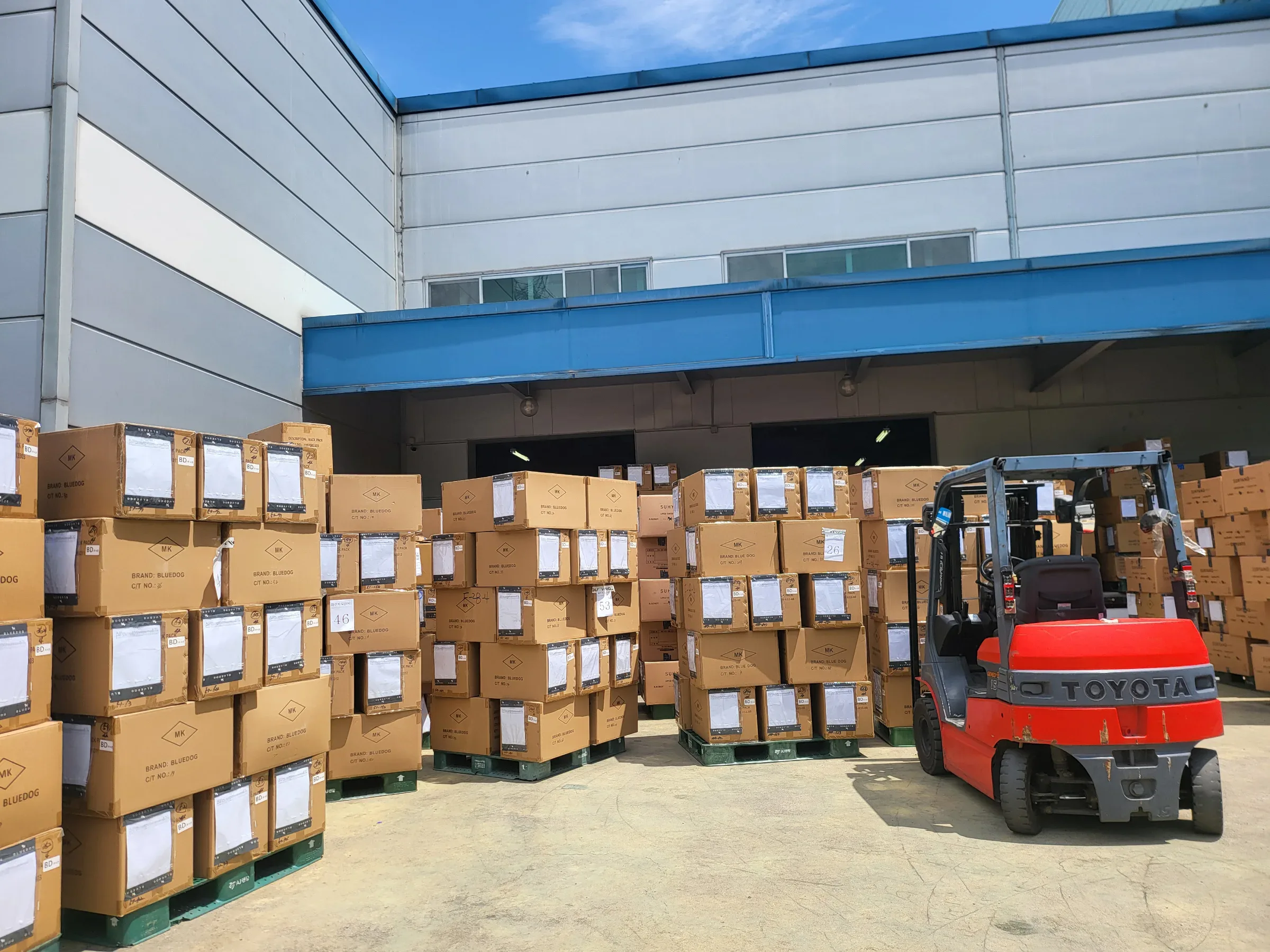
He Chose It Standing on the Floor That is the buyer, sitting with our team at a folding table in the middle of the sorting area with a laptop open. The cartons around him are what he had been working through that day. He went through several product groups before settling on one. He was not choosing from a PDF or a spreadsheet. He was opening cartons, checking condition, checking size runs, and asking what quantity actually existed behind each lot. By the end of the day he had picked the goods and the quantity. A day in a warehouse answers questions that six weeks of email cannot. That is the entire argument for coming, and it is why buyers are welcome in this building on any working day.
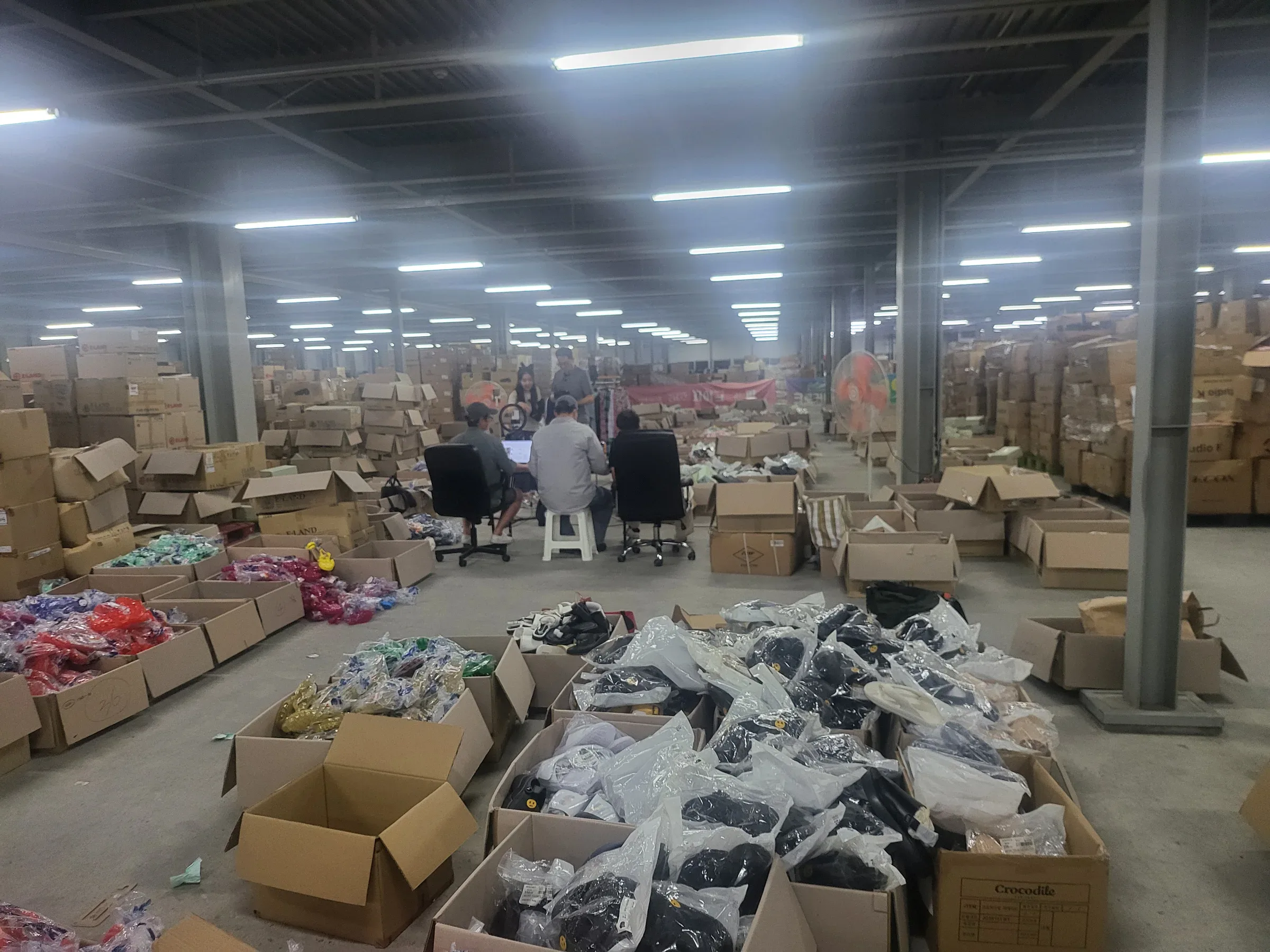
One 40HQ of Bags This is the same order, staged outside the dock and going onto trucks. Cartons are palletized, banded, and hand-numbered, and those numbers are our carton sequence, which is how a packing list gets reconciled against what physically leaves the door. A 40 ft high-cube holds roughly 76 m³ (2,690 cu ft) of internal volume, and bags fill volume long before they add weight. The whole order moved in one and a half 11-ton trucks, about 12 US tons per truck, which tells you more about the density of soft goods than about the size of the order. We delivered to the buyer’s own warehouse in Korea. He arranged the international leg himself. We are not going to call ourselves his freight forwarder, because on this order we were not one. We sorted, counted, packed, and delivered, and he took it from there. Buyers who want export documentation and booking handled for them can ask for that separately. Payment Comes After Inspection, and Before Release This is the part of the process we get asked about most, so here it is plainly.
- Tell us the categories and the season. Apparel, fashion accessories, bags, shoes, belts.
- We pull candidate lots onto the floor. Sorting is the actual work, and it is also what makes a lot describable.
- Inspect. In person in Gonjiam, or by video walkthrough if you cannot travel. English is spoken on site.
- Select, then confirm the packing list by carton, style number, color, and size run.
- Confirm on site, then pay in full. Nothing leaves the warehouse before payment is received at 100%. No exceptions, no partial release.
- Loading and delivery.
That order, inspect and then pay and then release, is deliberate. The buyer verifies the goods physically before any money moves, and we do not hold goods on credit. Both sides know exactly where they stand at every step, and neither side is asked to trust the other on faith.
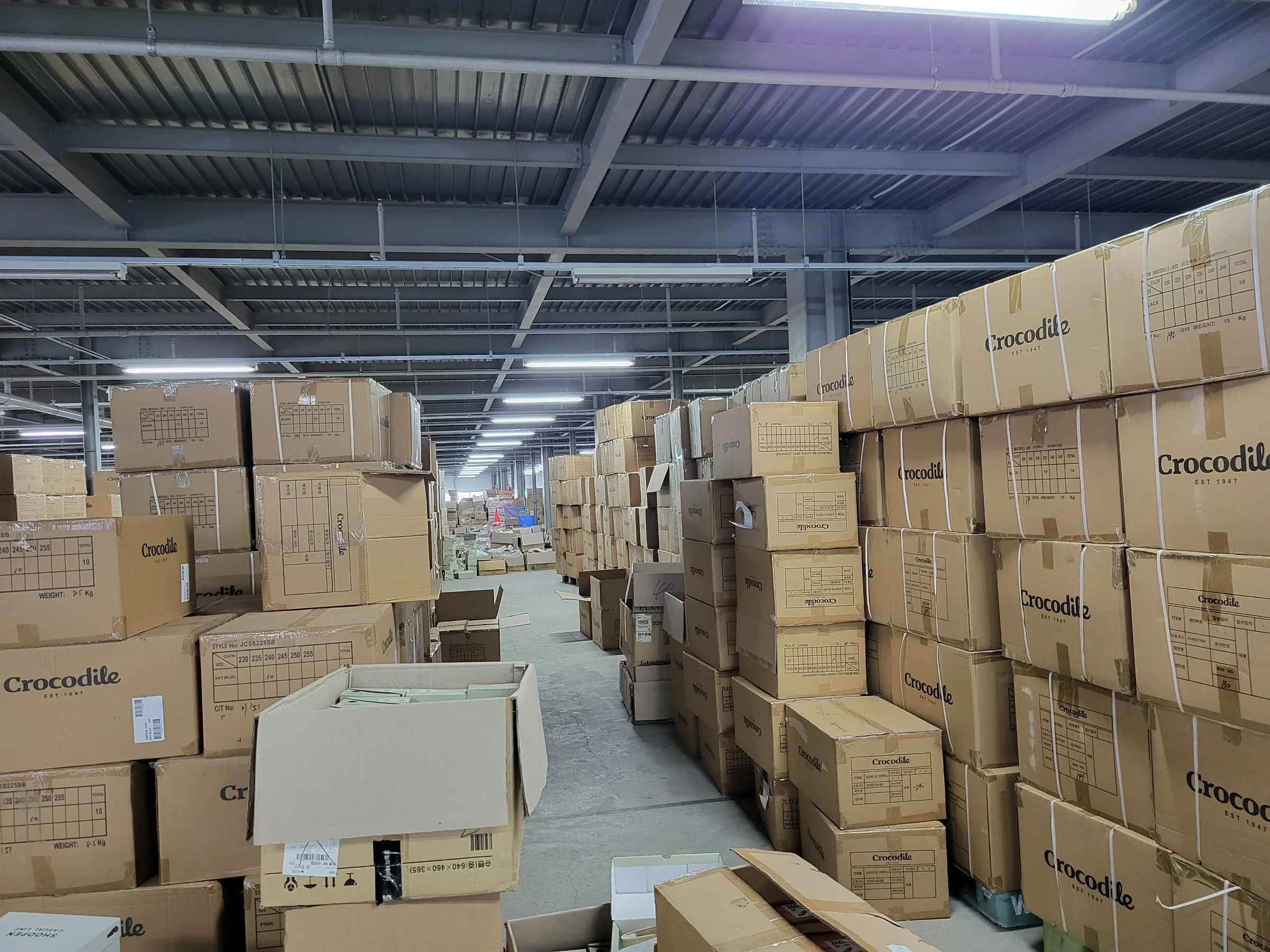
What 106,000 sq ft Actually Holds These three photos are the first floor of the Gonjiam warehouse, unstaged. Look at the carton faces in the aisle shot. Each one carries a printed grid: style number, color, and a size breakdown with quantities per size. That grid is why a packing list can be issued at all. Stock that arrives without it has to be opened, counted, and re-marked before it can be sold to anyone who cares what they are receiving.
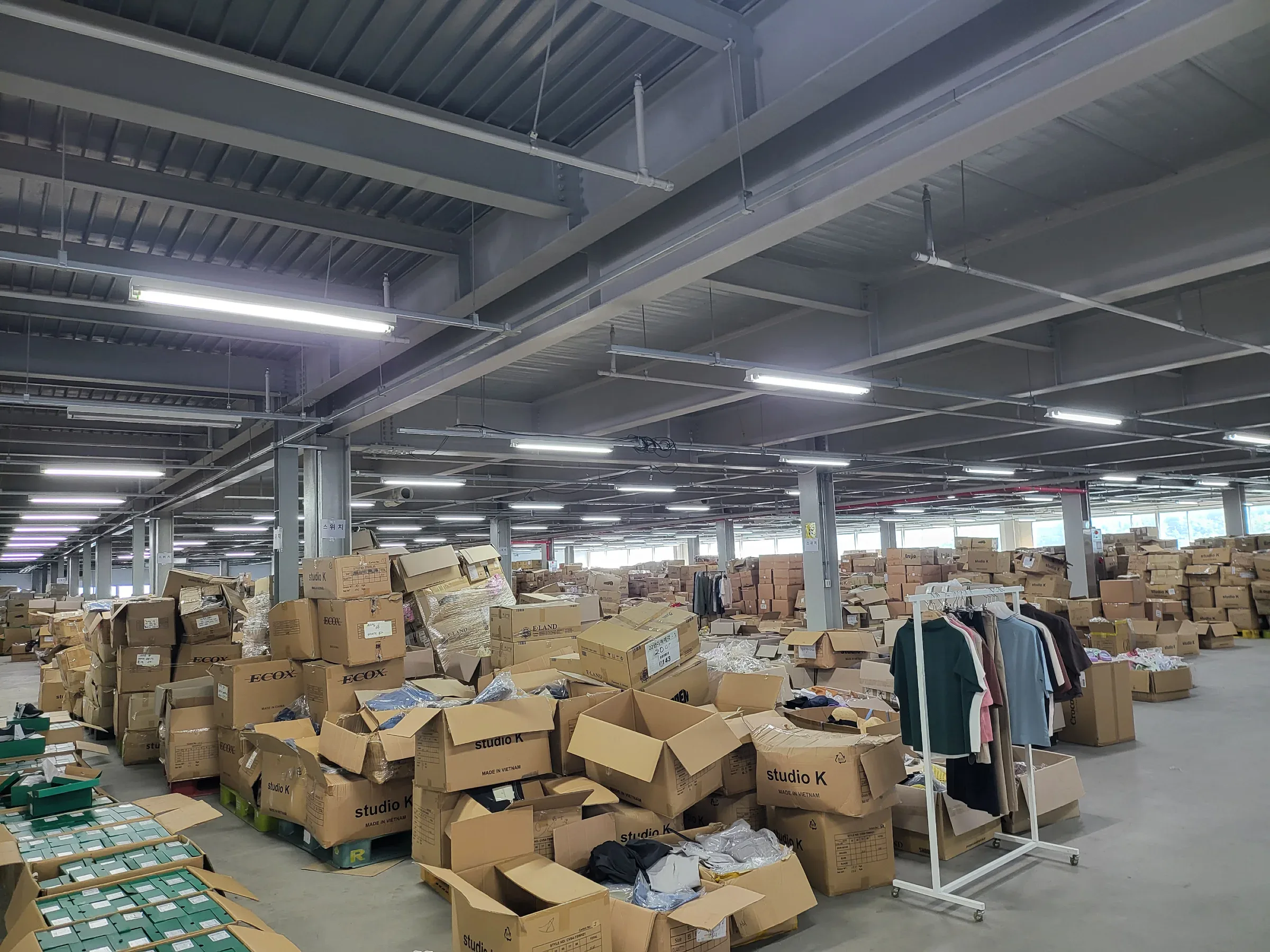
Scale is easier to picture in trucks than in square feet. A single intake fills five 11-ton trucks, roughly 12 US tons each, arriving together, tens of thousands of units at a time. Sorting one intake takes several days. That is the pace this floor is built around.
